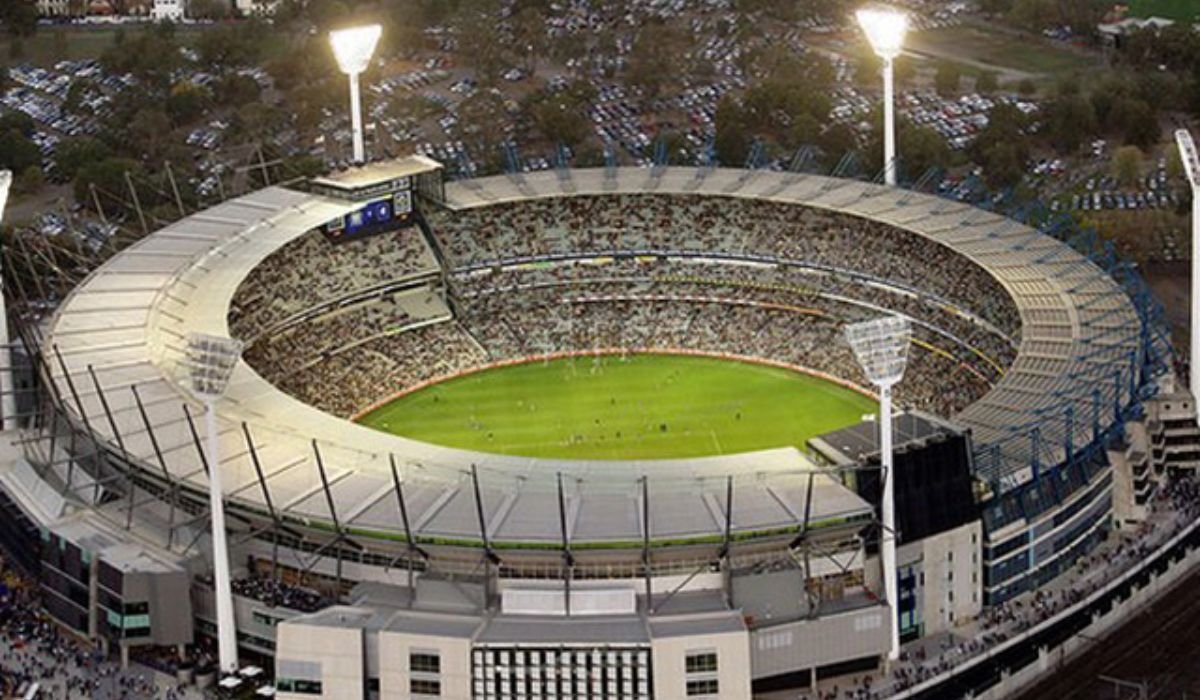
Melbourne Cricket Ground (MCG) – Better known to Australians as ‘The G,’ is one of the most famous Historic cricket stadiums in the world. Based in Melbourne, Victoria, Australia, the ground is viewed as the home of Australian cricket and has been the site for innumerable iconic matches in Test, One Day International (ODI) and Twenty20 International (T20I) formats. The MCG is not just a cricket ground but also a venue for Australian Rules Football, concerts and international sports events.
The MCG, which has about 100,000 seats for spectators, is the largest cricket stadium in Australia and one of the biggest sports grounds on Earth. The ground has been home to some of cricket’s finest moments since it was initially built during the 19th century, along with a number of iconic Ashes battles, World Cup finals and Boxing Day Test matches. With a Long History, Modern Infrastructure and An Electric Stadium Atmosphere You Have One of The Most Revered Sporting Arenas On The Planet
Melbourne Cricket Ground Overview
| Feature | Details |
| Stadium Name | Melbourne Cricket Ground (MCG) |
| Location | Melbourne, Victoria, Australia |
| Established | 1853 |
| Opened | 1854 |
| Owner | Victorian Government |
| Operator | Melbourne Cricket Club (MCC) |
| Seating Capacity | Approximately 100,024 |
| Home Teams | Australia, Victoria, Melbourne Stars, Melbourne Renegades |
| Ends | Members’ End & Great Southern Stand End |
| Playing Surface | Natural Grass |
| Floodlights | Yes |
| Largest Cricket Stadium in Australia | Yes |
History and Construction
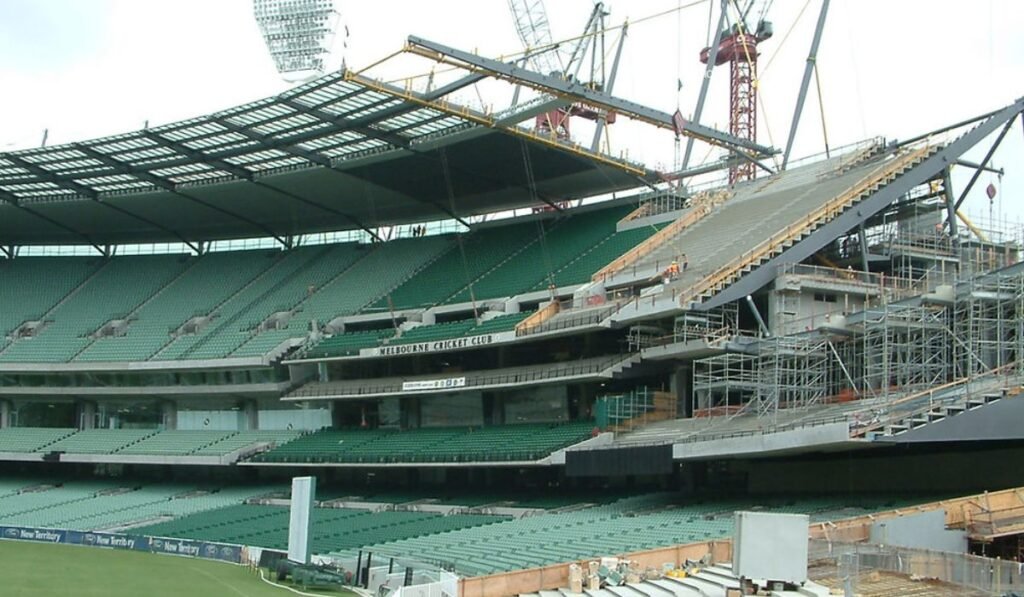
Melbourne Cricket Ground was founded in 1853, just a few years after the city itself was established. It started life as a small sports facility, but after cricket surged in popularity, it was expanded on an ongoing basis for decades.
Construction started in 1853, and the first iteration of the ground opened in 1854. Many are going to the stadium, which has been rebuilt numerous times, for the upgrade of the scene as one of the most iconic sports venues in Southern Europe. There were large-scale renovations prior to the 1956 Olympic Games, the 1992 Cricket World Cup and especially in time for the 2006 Commonwealth Games, with several grandstands being rebuilt to include modern facilities.
Whereas most modern stadiums are built in one part, the MCG has evolved from continuous expansion for over 170 years. Each renovation retained its historic character but added top-class conveniences for players, officials, media and fans.
The MCG today has plush hospitality suites, corporate boxes, huge digital scoreboards, contemporary dressing rooms that happily meet the needs of today’s cricketing population with great drainage systems to boot and one of the greatest spectator experiences in world cricket.
Pitch Report
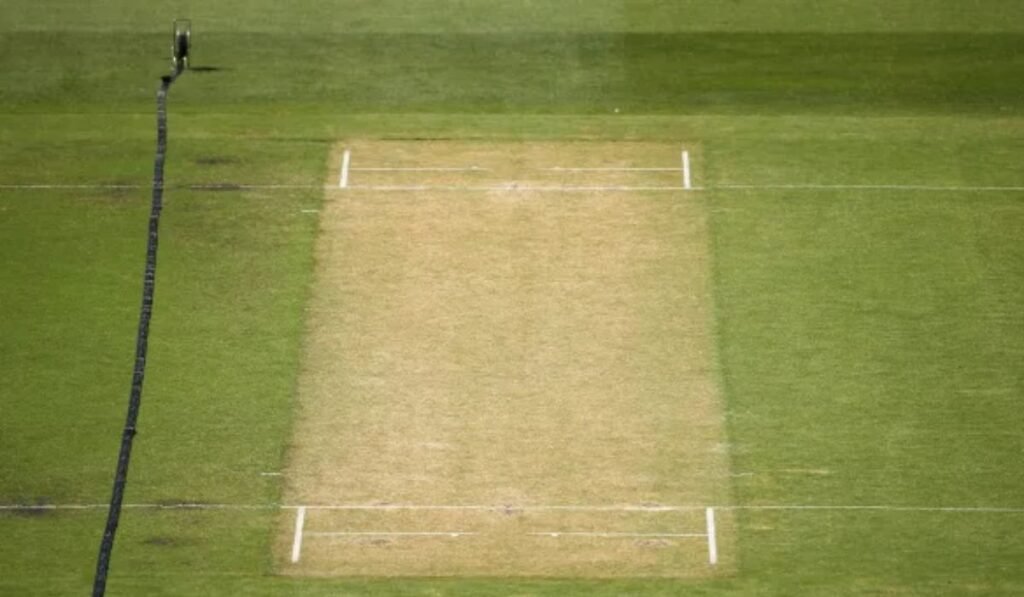
The Melbourne Cricket Ground pitch is classically one of the most even surfaces in world cricket. In the early stages of a test, the fast bowlers find bounce and seam movement, while batters tend to enjoy generally consistent pace once they set. Test match surfaces wear out gradually, and with footmarks created by batsmen trudging forward, spinners come into action. It is a good pitch, neither too moist nor too dusty; effortlessly achieving the right balance between bat and ball for closely-fought contests.
Boundary Dimensions
The Melbourne Cricket Ground is known for its large ground with boundary sizes in comparison to virtually every other international cricket ground.
- Straight Boundary: Approximately 82–85 metres
- Square Boundary: Approximately 86–90 metres
- Longest Boundary: Nearly 90 metres
- Shortest Boundary: Around 78 metres
These long boundaries mean hitting them for fours and sixes requires outstanding power and timing. With athletic players saving runs at one end, Fielding also becomes important.
Seating Arrangement
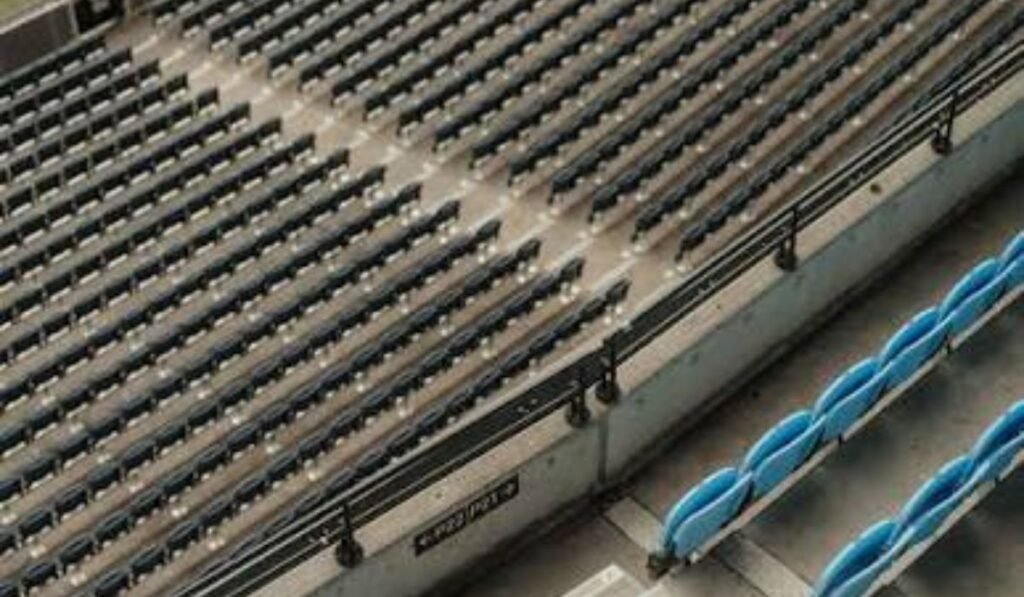
With a capacity of more than 100,000 seats, the Melbourne Cricket Ground is Australia’s biggest sporting venue.
The seating arrangement includes:
- Great Southern Stand
- Shane Warne Stand
- Ponsford Stand
- Olympic Stand
- Members’ Pavilion
- Corporate Hospitality Boxes
- Premium Suites
- Public Seating Areas
- Media Centre
- Accessible Seating for differently-abled spectators
With vantage points from virtually every seat in the house, if there’s anything this stadium has done right, it’s make you feel like you’re a part of it. Comfort is added to fans with large LED screens, multiple food courts and merchandise outlets, medical facilities and very wide passageways.
First Test Match
| Detail | Information |
| Date | 15–19 March 1877 |
| Teams | Australia vs England |
| Winner | Australia |
| Historical Importance | First officially recognized Test match in cricket history |
The first-ever Test match played anywhere in the world took place at the Melbourne Cricket Ground in 1877, making the venue an integral part of cricket history.
First ODI Match
| Detail | Information |
| Date | 5 January 1971 |
| Teams | Australia vs England |
| Winner | Australia |
The first One Day International in cricket history was played at the MCG after rain ruined a scheduled Test match. This historic event marked the beginning of ODI cricket worldwide.
First T20 International Match
| Detail | Information |
| Date | 9 January 2005 |
| Teams | Australia vs New Zealand |
| Winner | Australia |
The MCG also hosted one of the earliest international T20 matches, further adding to its remarkable legacy.
Memorable Cricket Records
Highest Test Team Score
- Australia: 624 against Pakistan (1989–90)
The MCG has witnessed several massive Test totals, thanks to its batting-friendly conditions after the initial sessions.
Highest ODI Team Score
- Australia: 355/5 against England (2015 World Cup)
This remains one of the finest ODI batting displays seen at the stadium.
Highest T20 International Score
- England: 241/3 against Australia (2022)
The match showcased the evolution of modern T20 batting with aggressive stroke play.
Highest Individual Test Score
- Bob Cowper – 307
Bob Cowper became the first Australian to score a triple century at the MCG.
Highest Individual ODI Score
- Shane Watson – 185*
One of the greatest ODI innings was played at the Melbourne Cricket Ground.
Best Bowling in a Test Innings
- Jim Laker – 9 wickets
An outstanding bowling performance that remains among the best ever recorded at the venue.
Best Bowling in ODI
- Glenn McGrath – 7 wickets
One of Australia’s greatest fast bowlers produced an unforgettable spell at the MCG.
Also Read: Longest Six in IPL History | Virat Kohli Total Centuries
Boxing Day Test
Premier Cricket is big across Victoria, none more so, I’m sure, than the world-renowned Melbourne cricket ground, which hosts the annual Boxing Day Test every 26 December. This custom draws tens of thousands to the stands each day and millions before the television screens around the world.
From Sir Donald Bradman to Shane Warne, Ricky Ponting, Sachin Tendulkar and Jacques Kallis to Brian Lara, Virat Kohli, Steve Smith and Pat Cummins – many greats who have enlivened Boxing Day Tests at the MCG.
ICC Cricket World Cup History
Pull The extended occurrence of the Melbourne Cricket Ground, which has hosted various versions of the World Cup.
Major highlights include:
- 1992 Cricket World Cup matches
- Final 2015 ICC Cricket World Cup
- Numerous group-stage and knockout matches
- Record attendances exceeding 90,000 spectators
The other was the 2015 World Cup Final in which Australia hosted New Zealand in front of full stands and lifted the trophy on home soil.
Facilities
- World Class Infrastructure at MCG, which includes;
- International-standard dressing rooms
- Practice wickets
- Indoor training centre
- Modern media facilities
- Corporate hospitality suites
- Premium lounges
- LED floodlights
- Advanced drainage system
- Large digital scoreboards
- Cricket Hall of Fame & Museum
- Merchandise stores
- Food courts
- Medical centre
- Wheelchair-accessible seating
Why the Melbourne Cricket Ground Is Special
- The MCG differs from most other sports venues for a number of reasons:
- The venue of the traditional Boxing Day Test
- The ground where the first-ever Test match was played.
- Ground of 1st ODI in the world.
- Australia’s largest cricket stadium.
- Seating capacity of over 100,000.
- The first-class cricketing history spans over 170 years.
- Outstanding facilities for players and spectators alike.
- Venue for ICC World Cup finals and many other international sporting events
- Regarded as one of the most iconic cricketing venues
Conclusion
This 3-hour tour guided by specialists and experienced past cricketers, not only provides A-Z information about cricket but also brings back your memories of cricket when you go through the beautiful pavilion inside. Melbourne Cricket Ground is a lot beyond merely being a cricket arena; it represents over 150 years of culture and history behind this famous global sports landmark. The MCG has been home to many of cricket’s greatest moments since its inception in 1853, from hosting the inaugural Test match and first-ever ODI to memorable Boxing Day Tests and Cricket World Cup finals. The world’s largest MCG still ranks as one of the most coveted grounds around with its world-class facilities, colossal capacity, level playing surface and historical appeal. Has have been anything from watching a thrilling Ashes contest to a World Cup final, watching cricket in the MCG is one of the top experiences.
FAQs –
1. When was the Melbourne Cricket Ground established?
The Melbourne Cricket Ground was established in 1853 and officially opened in 1854.
2. What is the seating capacity of the Melbourne Cricket Ground?
The MCG has a seating capacity of approximately 100,024 spectators.
3. Which historic cricket matches were first played at the MCG?
The MCG hosted the world’s first Test match in 1877 and the first-ever ODI in 1971.
4. Why is the Melbourne Cricket Ground famous?
The MCG is famous for hosting the annual Boxing Day Test, ICC World Cup matches, and its rich cricketing history.
5. What type of pitch does the Melbourne Cricket Ground have?
The MCG offers a balanced pitch that provides assistance to both fast bowlers and batters throughout a match.
Read More: Best Cricket Academy in India | Royal Challengers Bengaluru vs Delhi Capitals Rivalry Timeline

Dalvi is a passionate cricket writer and analyst at CricketDeck, dedicated to delivering accurate, engaging, and up-to-date cricket content. With a strong interest in IPL, player stats, match analysis, and trending cricket news, Dalvi simplifies complex insights into easy-to-read articles for fans worldwide. His writing focuses on providing real value, deep analysis, and the latest updates from the cricket world. Through CricketDeck, Dalvi aims to connect cricket lovers with reliable information and exciting match coverage.